Neuroscience, Artificial intelligence, Philosophy of mind, Philosophy of free will
Why and how are we intelligent, in some sense? This question is the main driving force behind my research, and I aim to address them through empirical investigation. The followings are a bit more short-term and specific questions:
How do biological and artificial neural networks acquire representations suitable for performing diverse tasks?
How and under what conditions do cooperation and communication among agents emerge? The current trend in AI is to tackle every problem with a single large model. In nature, however, there are many examples of multiple small agents working together to produce complex behavior. Honey bees, for instance, can communicate the locations of threats and resources with only about a million neurons. Can artificial agents do something similar?
How does knowledge arise? Modern artificial intelligence relies heavily on human knowledge—through training data in supervised learning, through handcrafted and intricate loss functions in unsupervised and reinforcement learning, and through manually designed architectures in general. Could artificial intelligence instead start literally from scratch, with minimal dependence on human knowledge, and learn about its environment on its own through simple training schemes such as evolutionary algorithms?
I am also drawn to brain–machine interfaces and related fields, largely inspired by cyberpunk culture. Cyberpunk classics such as Ghost in the Shell (Shirow-Masamune, 1989) made me realize how constrained we are as human beings, both cognitively and physically. Our memory and computational ability are limited; there are illnesses, injuries, and physical conditions we cannot cure; we only have a single body. These constraints are so obvious that we rarely think about them seriously—yet I find them genuinely hard to accept. I want to move beyond these limitations through research that extends the capabilities of our brain and body.
I also have a strong interest in the philosophy of free will. The intuition is this: our brain follows physical laws just like any other object in the universe, and there is no supernatural soul that is free from those laws. Thus, there seems to be no room for a free will that can alter future outcomes beyond the causality. Stochasticity in quantum mechanics does not help, since stochasticity is essentially the opposite of will. The rational options would be either to accept that free will does not exist, or to look for an alternative definition that is compatible with causality. I am personally inclined toward the former, and considering how to deal with it.
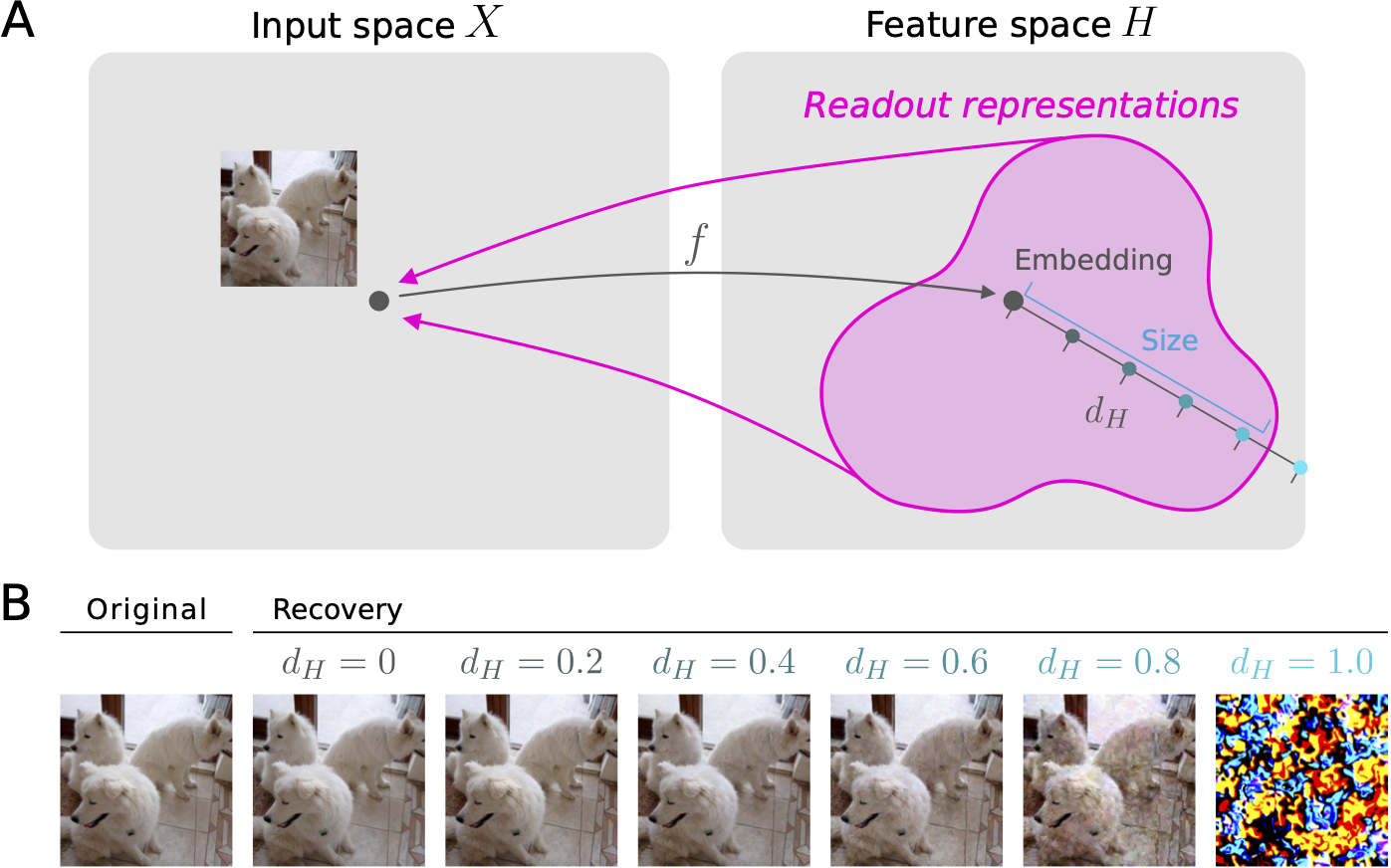 Readout Representation: Redefining Neural Codes by Input RecoveryIn The Fourteenth International Conference on Learning Representations, 2026